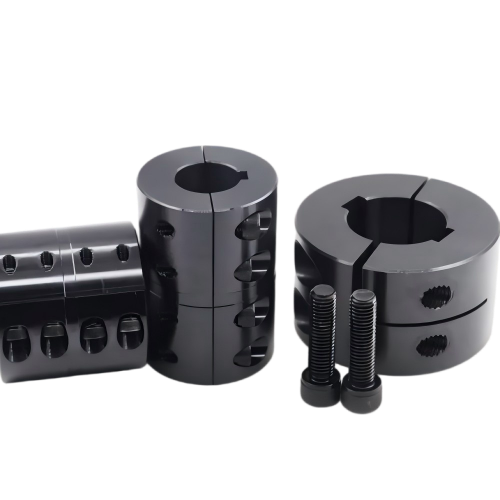
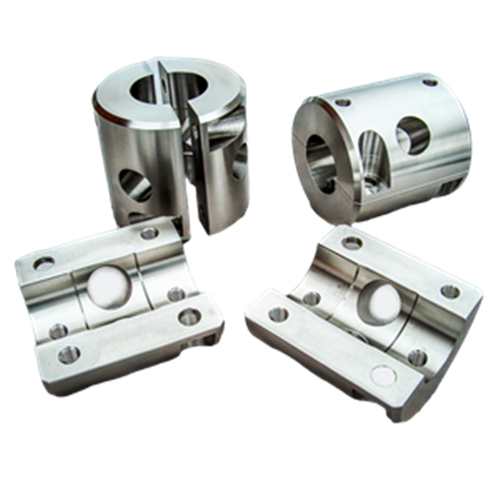
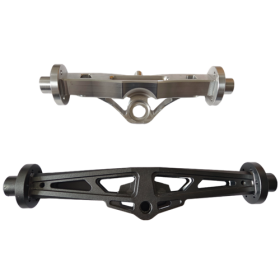
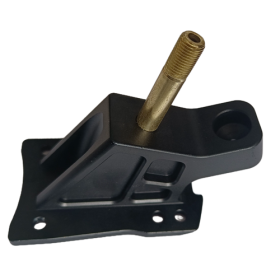
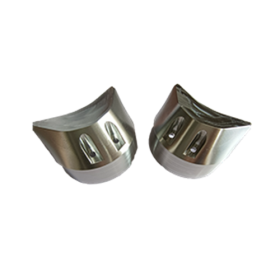
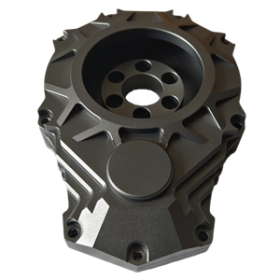
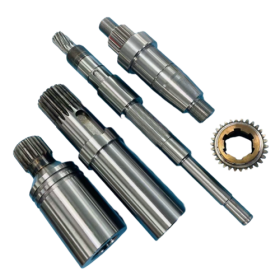
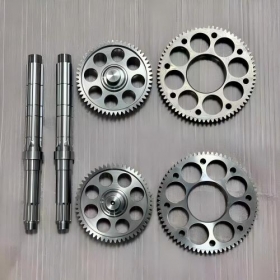
Coupling serve as key connection and control parts for mechanical transmission systems, which is a device that is used to connect two shafts together for power transmission.During power transmission, couplings can absorb shock, vibration and heat due to which they are important in many mechanical applications.
In manufacturing facilities, couplings connect motors to pumps, compressors, conveyor devices and other mechanical equipment. They ensure steady power transmission, shield premium devices from vibration harm and shaft misalignment. They also deliver reliable performance for production processes demanding high operational stability.
Present these as a grid or bullet list with icons:
| Coupling Type | Key Machining Requirements | Typical Materials |
|---|---|---|
| Rigid (sleeve / flanged) | Bore concentricity ≤0.01mm, face perpendicularity, dowel pin holes reamed to H7 | 1045, 4140, 1215, 316 SS |
| Jaw / Spider (curved jaw) | Jaw spacing uniform ±0.03mm, radiused root fillets to reduce stress risers | 6061-T6, 7075-T6, nylon insert pockets |
| Gear coupling (hub + sleeve) | External/internal gear teeth, AGMA Q10 or better, crowned tooth tips | 4140 heat treated, 8620 case hardened |
| Disc / Membrane coupling | Thin disc packs with bolt holes – flatness 0.02mm, no burrs | 17-4 PH SS, 316L, Titanium Grade 5 |
| Oldham (three-piece) | Center disc slot width tolerance ±0.01mm, sliding fit without binding | Acetal (POM), aluminum hubs with plastic disc |
| Beam / Helical (one-piece) | Helical cut with uniform wall thickness, no chatter marks | 2024 aluminum, 303 SS, PEEK |
| Chain coupling | Sprocket tooth profile to ANSI B29.1, hardened teeth optional | 4140 pre-hard, 1045 induction hardened |

Dongguan Bomei Precision Machining Co., Ltd
Address: 101, No68, Ditangshan Road 2,Dalingshan Town, Dongguan, Guangdong, China
Contact person: Evan Xiao Evan Xiao